The Second Touch: Why Possession Can Matter More Than the First Pass
The second touch in soccer can turn a recovery into an attack. Learn why securing the ball and creating a useful next option can matter more than a first pass.
A midfielder pokes the ball away, and the crowd gives a little cheer. Before the team can celebrate the recovery, an opponent closes, a teammate arrives, and the ball is loose again. In soccer, the second touch can matter more than the first pass because winning possession is only the start: the team still has to make the ball playable.
A first pass may move the ball forward, but direction alone does not make it useful. If the receiver is surrounded, off balance, or facing away from support, that pass can hand possession back. A controlled touch, protective carry, or sideways release may look less ambitious and give the team a better chance to build an attack.
The first pass
A pass immediately after a recovery can exploit a defense that is shifting or briefly out of shape. But opponents are often close to the ball, and the player who wins it may not yet have a clear view of the field. The forward lane may look open from the ball carrier’s angle while a defender is already moving to intercept.
The first pass is valuable when it reaches a teammate who can do something with it: turn, carry, find another player, or protect the ball until support arrives. A pass that merely travels upfield can leave its receiver isolated. The meaningful comparison is not forward versus backward; it is a risky first pass versus a controlled action that preserves better options.
The second touch
Here, “second touch” means the action after a team gains or receives possession, not a rule about how many contacts a player may take. That action can be a pass, a shielding touch, a carry into space, or a short reset. Its value lies in what it prepares next.
A player who cushions the ball away from pressure may gain time to scan and choose. A teammate who moves behind the ball can offer a safe outlet, while another run can stretch the defense. The team’s first action after the recovery may therefore be less about immediate progress and more about making a reliable next decision possible.
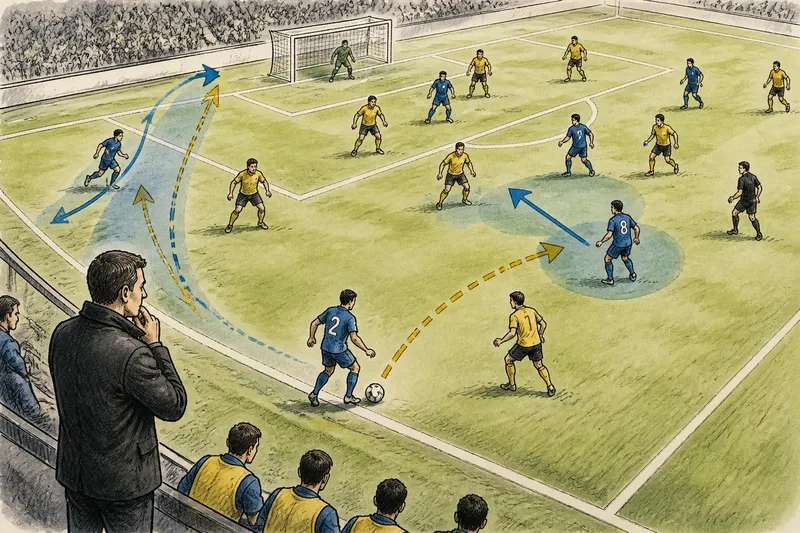
Say a team wins the ball near the sideline with an opponent closing. The carrier sees a forward pass toward a teammate marked tightly and a backward outlet moving into space. If the carrier forces the forward ball, the receiver may be trapped; if the carrier uses the outlet, the expected result is a calmer possession with time to find a new forward lane. The tradeoff is clear: the team gives up immediate forward movement to avoid asking an isolated teammate to solve the whole problem.
Support and space
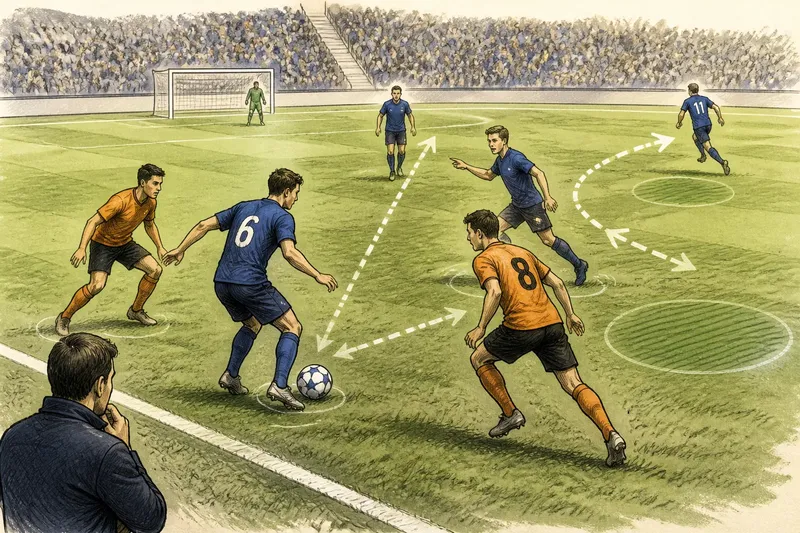
The ball carrier’s options depend on teammates who may never touch the ball. One player can come short, another can stay higher, and a third can move into a channel between defenders. When those runs occupy different lanes, the carrier can choose among safer and more ambitious actions.
Support runs can also change the defense. A teammate moving toward one side may draw a defender away from another, creating room for a pass or carry. Watch the players around the ball as well as the ball itself: their movement often explains why a modest touch becomes the start of an attack.
Scanning helps the player make use of that support. A glance over the shoulder can reveal pressure arriving from behind; a look upfield can show whether a teammate is free. The player does not need to see every option before receiving, but knowing the nearest pressure and outlet can prevent a rushed decision.
Choosing the next action
After possession changes, the choice depends on pressure, field position, teammates’ movement, and the opponent’s shape. Consider what each option is meant to accomplish:
- Play forward: If a teammate can receive beyond nearby pressure and has room to act, play forward; if the receiver is marked or isolated, use a safer outlet or carry away from pressure instead.
- Play sideways or back: If the forward lane is blocked but a teammate offers a clear angle, recycle the ball; if the outlet is also under pressure, protect the ball briefly or move into open space.
- Carry: If open grass lies ahead or a defender can be drawn out, carry into that space; if the route closes or leaves the carrier exposed, release the ball to a teammate with a clearer view.
- Shield or hold: If immediate pressure makes a clean pass unlikely and support is arriving, protect the ball; if no outlet is coming, look for a quick release or a controlled escape rather than waiting for the defense to close.
These options can work in sequence. A player might carry to draw an opponent forward, then pass sideways into the space that opens. A backward pass can prepare a forward attack by changing the angle and giving teammates time to move.
Reading the first pass?
Why can the second touch matter more than the first pass?
The first pass can be intercepted or leave its receiver isolated if the team has not secured control or arranged support. A useful second action can protect the ball and give the next player a clearer choice, even if it does not move play forward immediately.
Is a backward pass a failure?
No. A backward pass can relieve pressure and create a better angle for the next attempt. It helps when teammates use the reset to move or reshape; it is less useful when everyone stays static and the ball carrier has no new option.
Does possession always mean control?
No. A team can have the ball while crowded, facing its own goal, or unable to find a free teammate. Control is more evident when players can choose among actions rather than simply keep the ball away from an immediate tackle.
When should a player carry instead of pass?
Carrying can help when open space lies ahead or a defender can be drawn out of position. If the route closes or the carrier becomes exposed, a pass to a teammate with a clearer view may be the better choice.
From possession to threat
A useful second action does not need to produce a shot. The team may need several passes to draw an opponent out, move the ball from a crowded area, or switch play to the far side. The sequence is developing when it improves the team’s options or changes the defense’s position.
That is why a harmless-looking pass can matter more than an ambitious first ball. It may pull a defender toward the ball and leave a teammate free elsewhere. But if each exchange leaves the players in the same crowded spaces, possession is being kept without making the next action easier.
When watching a match, start with the moment possession changes. Notice who wins the ball, where pressure comes from, which teammates move to support, and whether the first pass gives its receiver room to act. Then follow the next touch: if it creates time, space, or a clearer route forward, that is why the second touch can matter more than the first pass.